

.
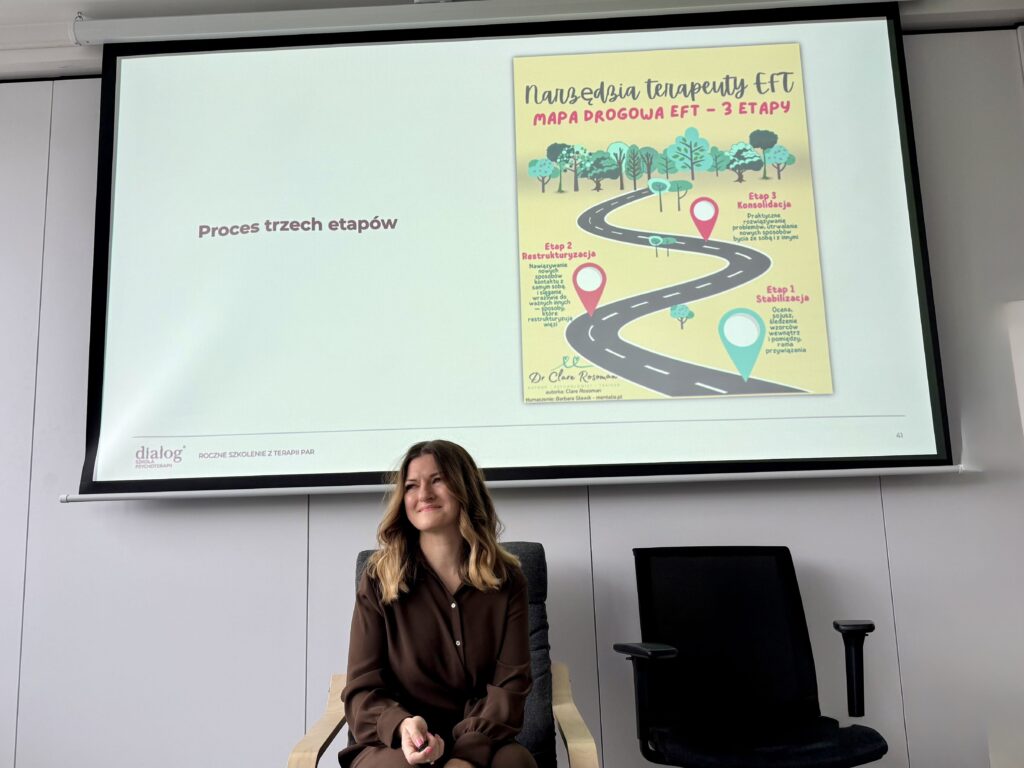
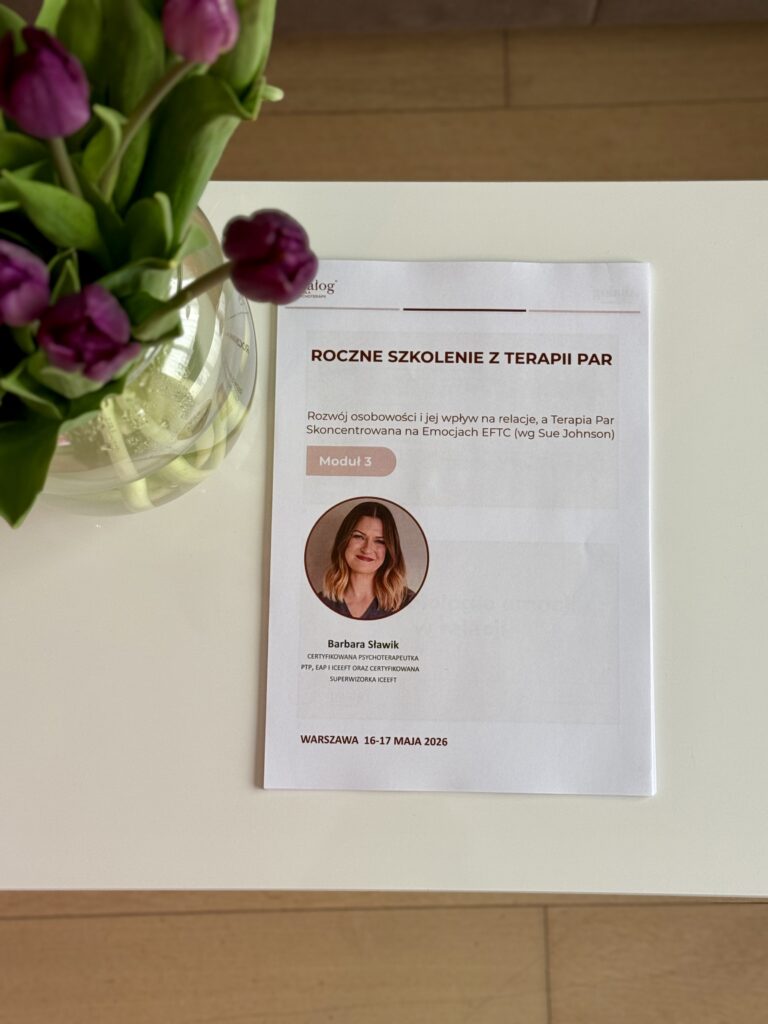
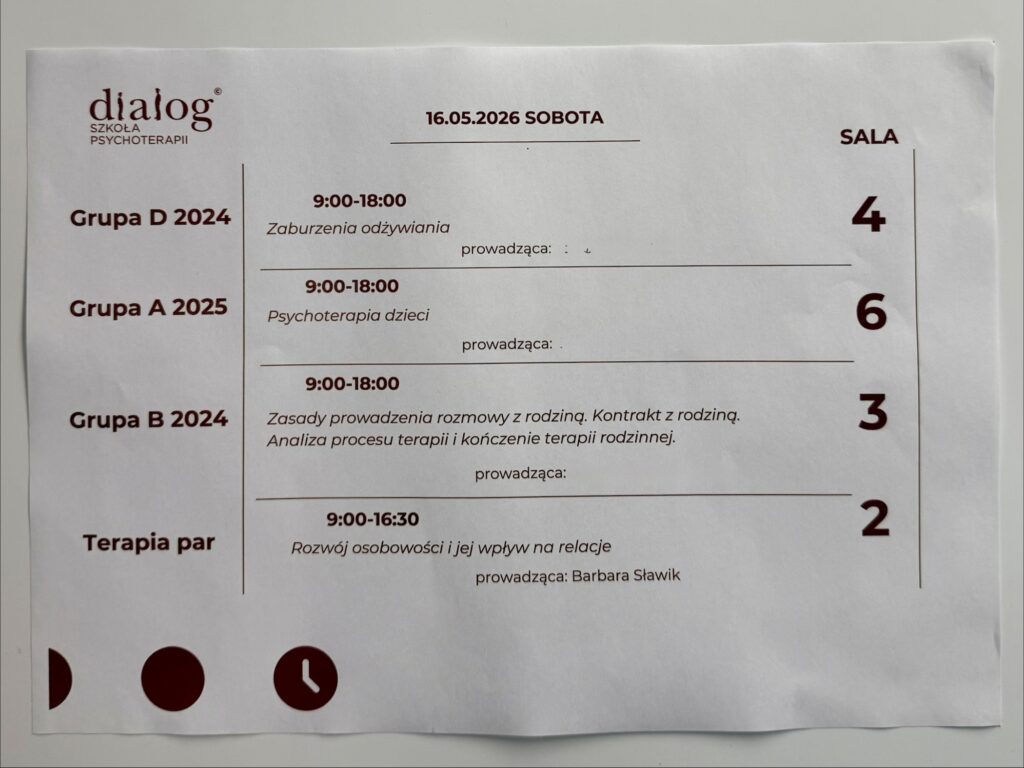
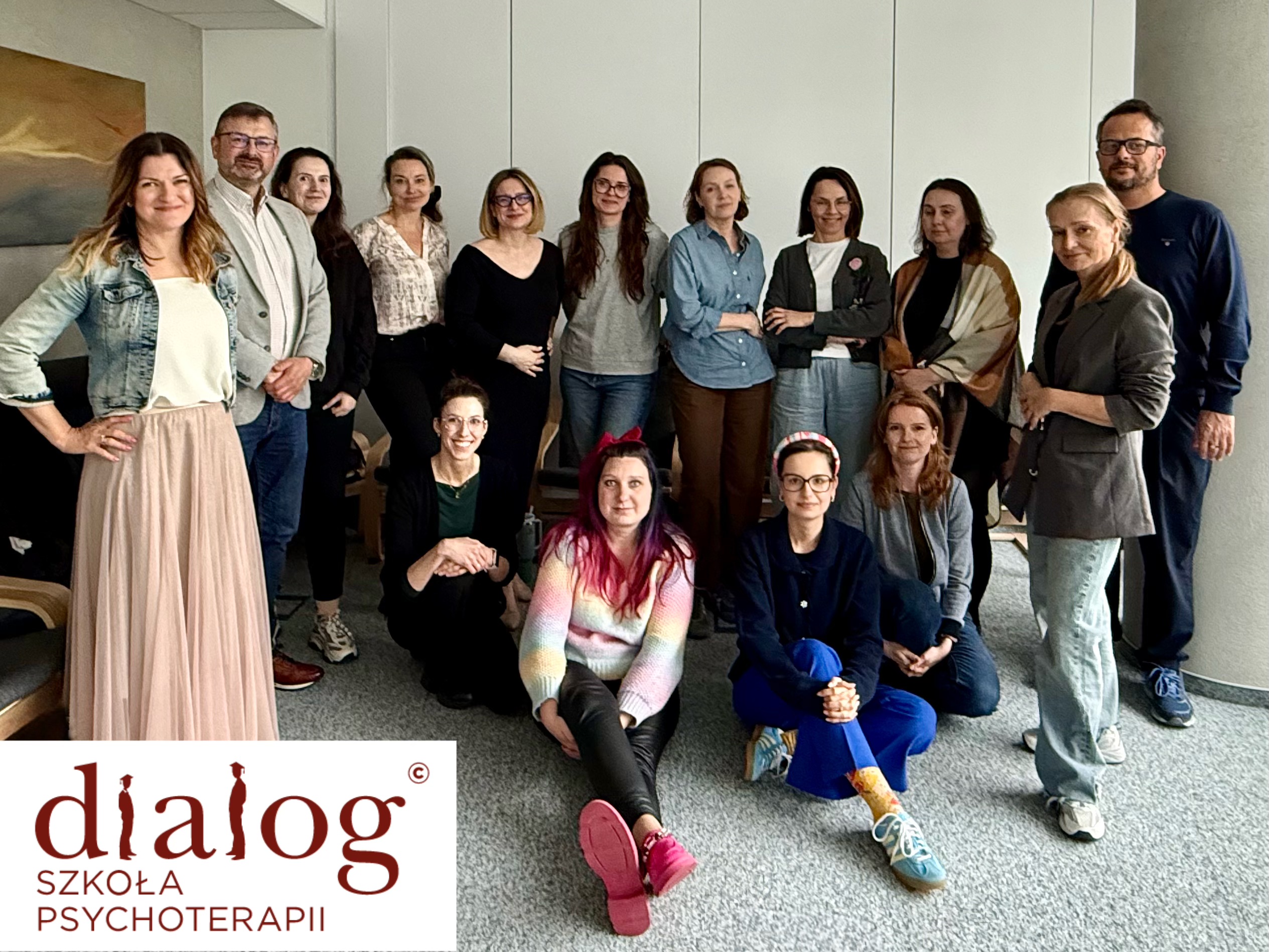
I’ve just wrapped up an intensive, two-day module (May 16-17, 2026) as part of the Annual Couples Therapy Training Program at the Dialog School of Psychotherapy. It was an enormous pleasure to lead the module “Personality Development and Its Impact on Romantic Relationships” – 16 hours of clinical workshop with a group of students who are growing their skills in working with couples. 💙
It was a weekend of working at full throttle – both head and heart. Over the two days we talked about how early experiences shape adult relationships, how partners’ bodies respond to threat and connection, and what we, as therapists, can do with all of this in the consulting room. 🧠💞
🔸 What we went through together
The weekend was designed so that theory met clinical practice right away. Step by step, we explored:
🧬 the neurobiology of emotion in relationships – the threat system vs. the attachment system, regulation and dysregulation, co-regulation in couples
🪢 attachment theory – attachment styles, from classical theories to contemporary dynamic models, and their consequences for adult relationships
🪞 mentalization – how to recognize non-mentalizing modes and how to develop mentalization in partners
💗 EFT – Emotionally Focused Therapy – relational cycles and experiential work with emotion in couples
We worked on clinical cases, analyzed session recordings, and practiced interventions through role-play. 🎭 I really love that moment when something starts to flow through the group: “oh, now I see this couple I’ve been working with for a while completely differently.” ✨
🔸 What moves me about this work
What I love most about leading trainings is the moment when I see theory stop being abstract and start being a tool. 🛠️ When someone says: “I realized today that my patient isn’t withdrawing out of anger – he’s freezing,” or when another notices that until now they had been trying to teach a couple communication before their nervous systems were even able to learn – I know that what we’re doing makes sense. 🌱
Working with couples demands a very particular kind of presence from the therapist – on one hand tender and structural, on the other close to emotion and attentive to process. 🧭 This is built over years of practice and supervision, but the foundation is laid right here – during weekends like this one, where you can make a mistake, pause, ask, and try again.
🔸 Thank you 🙏
Thank you to the group for your engagement, openness, and courage in working with your own examples. 💪 Thank you to the Dialog School of Psychotherapy for the invitation, and for creating a space where therapists learn to work with couples in a way that is solid, ethical, and grounded in current knowledge. 📚
See you at the next module – and in the meantime, I’m rooting for your work in the consulting room. 🤞💙
Barbara Sławik 🌿