

.
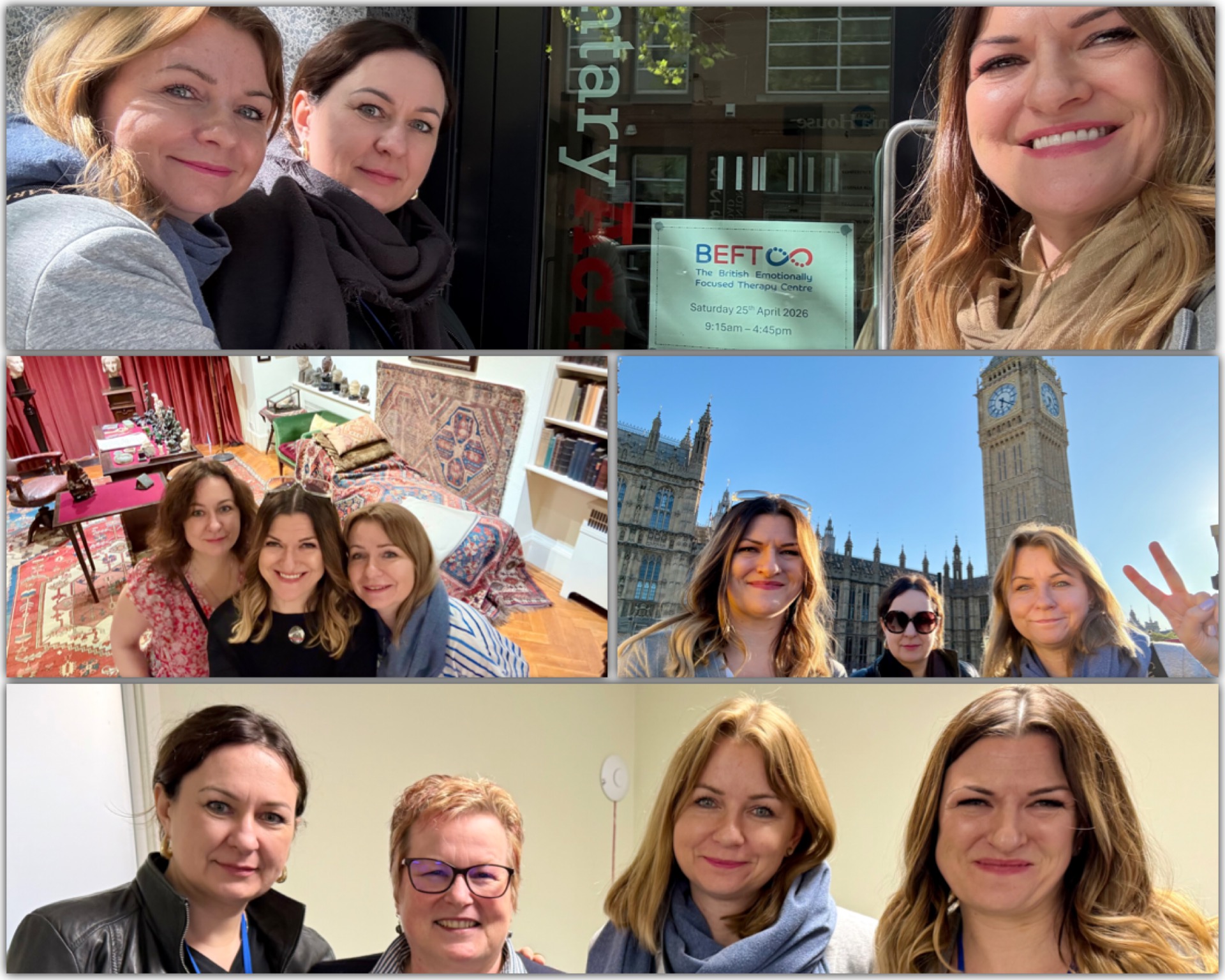
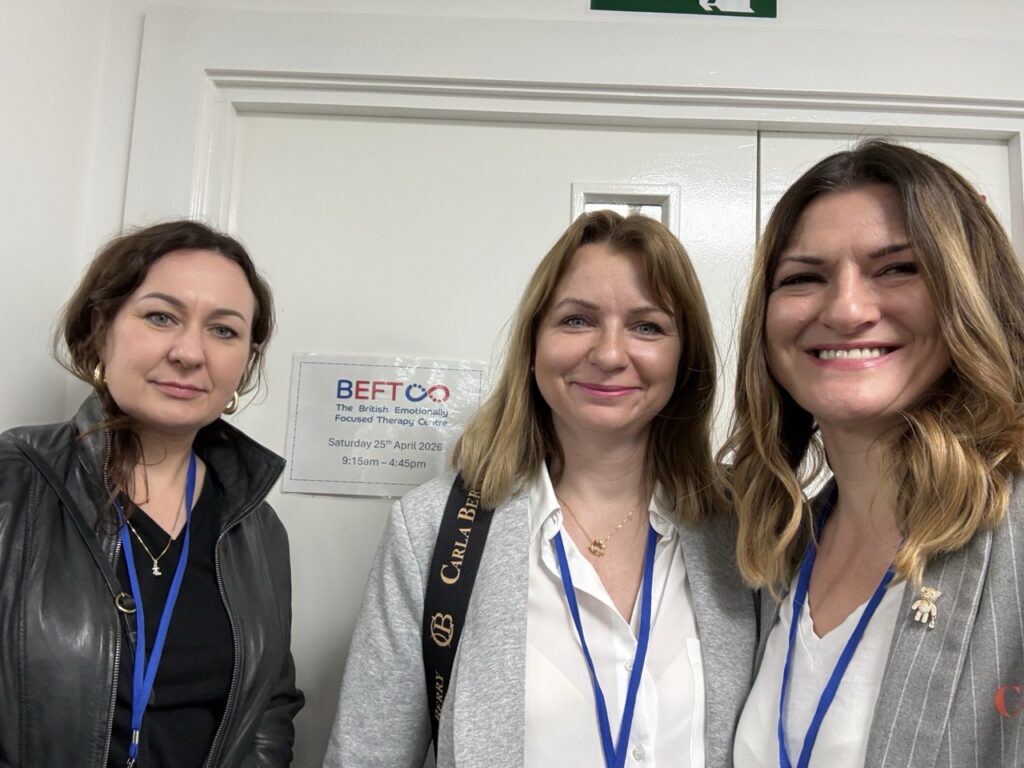
In late April we packed our suitcases and got on a plane to London. ✈️ The reason was twofold: the British Emotionally Focused Therapy Centre (BEFT) conference, which on 25 April brought together EFT therapists from across the country and beyond at VAI London, plus one small pilgrimage we couldn’t resist while we were in town – a visit to the Freud Museum on Maresfield Gardens. 🛋️ A bit like closing a circle: from the couch where modern psychotherapy began to a contemporary, neuroscience- and attachment-informed model of working with emotion and bond. Hence the title – from Freud to EFT.
🎤 The BEFT 2026 Conference – “All the EFTs”
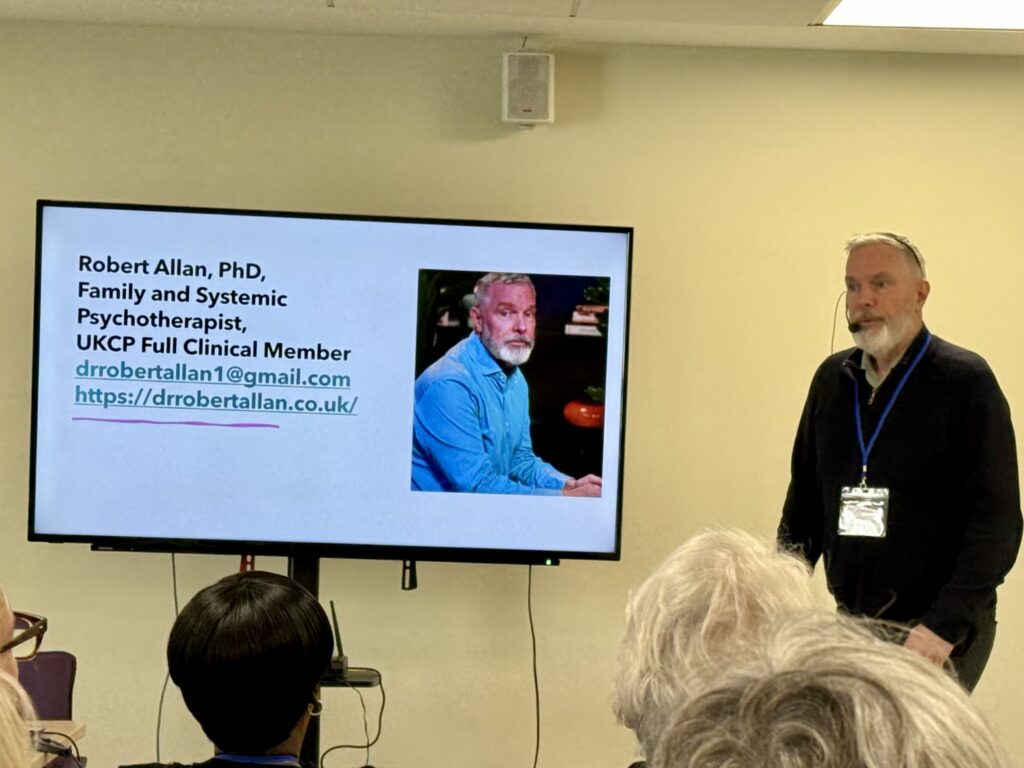
The conference was opened by Sarah McConnell, and then Robert Allan took the stage with the keynote “All the EFTs: Thinking Systemically, Conceptualising Attachmently, Doing Emotionally”. 🧠 Robert, a family and systemic psychotherapist, took on something many of us in EFT live with daily but rarely articulate in one breath – that Emotionally Focused Therapy is no longer one model but three modalities (EFCT for couples, EFIT for individual work, EFFT for families), all drawing on the same four sources: attachment theory, emotion theory, systemic thinking, and a humanistic-experiential approach.
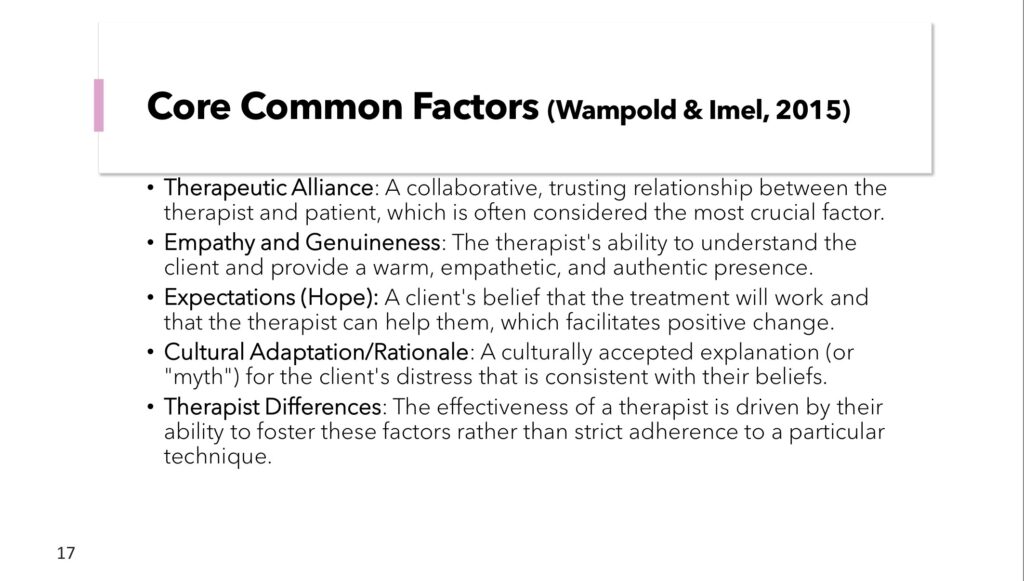
📚 Robert reminded us of the three process variables that consistently appear in EFT outcome research as predictors of good outcome: the quality of the therapeutic alliance (especially the task aspect), the depth of emotional processing in the second stage of work, and the partners’ capacity to enter interactions where they can articulate their fears and needs.
After the break the parallel sessions began, and here we had to choose. 👯♀️
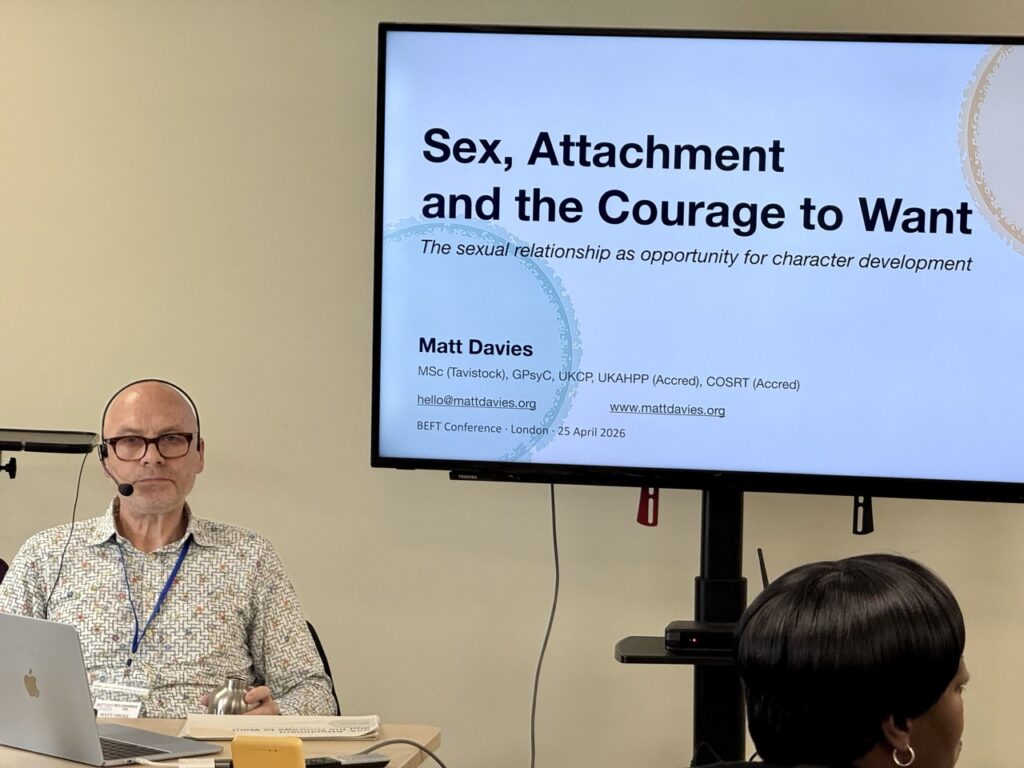
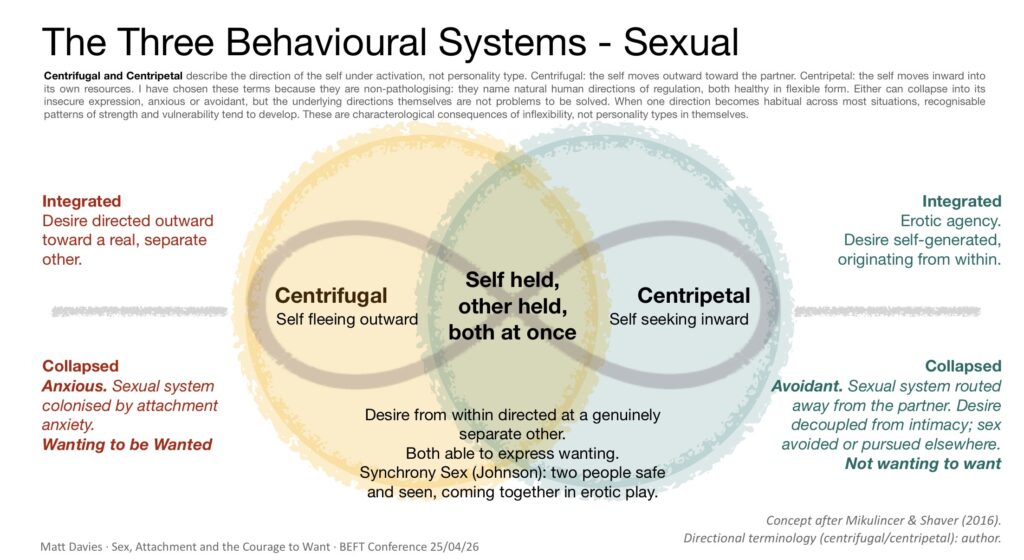
❤️🔥 “Sex, Attachment & the Courage to Want” — Matt Davies
Matt Davies – couple and relationship therapist and psychosexual therapist trained at the Tavistock clinic, UKCP-accredited psychotherapist – gave a talk that was at once philosophical, clinical, and deeply embodied. He began with the idea that relationships unfold in the tension between Love (drawing together, the drive toward connection) and Strife(individuation, the drive to remain oneself and apart). For Davies, sex is the place where these two forces meet most intensely – “a bonding activity between adults”, the stage where two internal worlds enact themselves between two bodies, the site where the systems of attachment, caregiving, and desire converge.
🔺 What moved us most was his triangle: Desire – Courage – Fear. Desire as the forward movement of the self, as the appetite for life, for contact, for what is not yet ours. Fear not as the enemy of desire but as its constant companion – because every desire worth having has a cost, and fear is what registers the cost. And between them, courage – not the absence of fear, but movement toward what is wanted with fear still present. “Courage is what lets desire cross the gap between private longing and visible act.”
🌑 Matt also drew on Bowlby and his concept of defensive exclusion — what the attachment system learns not to know, and the body learns not to feel. When a caregiver carries sexual shame or unresolved sexual trauma, the child’s embodied, sensory experience is met with anxiety, withdrawal, or silence. The child learns to exclude what dysregulates the caregiver. And that lesson does not dissolve in adulthood — it resurfaces in the arena where bodily need, vulnerability, and attachment converge most intensely: in sex. It was a strong, clinically useful frame for thinking about low desire, dissociation during intimacy, or chronic erotic disconnection in long-term relationships.
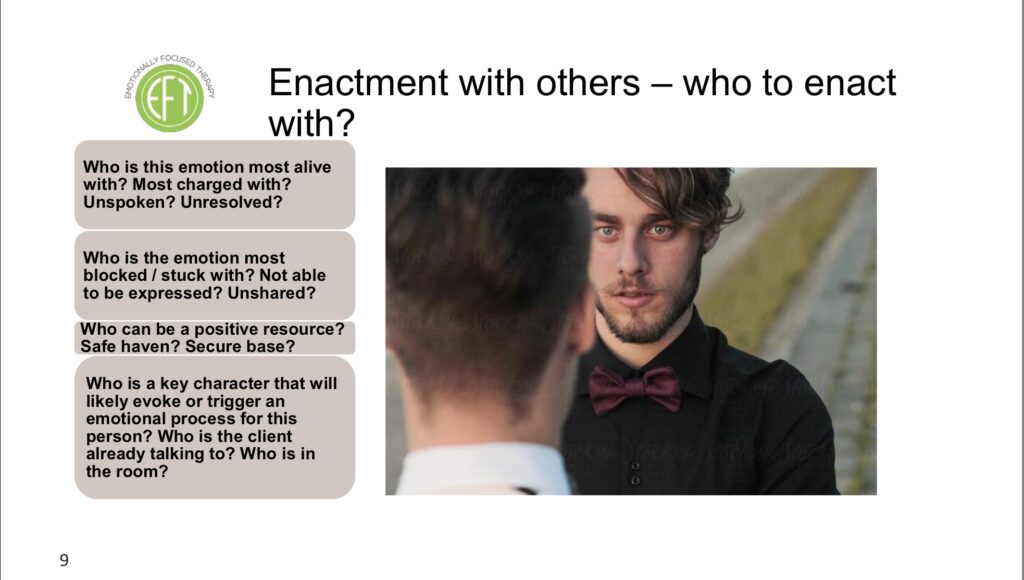
🎭 “Shaping Engaged Encounters in EFIT” — Helene Igwebuike
Running parallel, Helene Igwebuike, ICEEFT Certified Therapist, Supervisor and Trainer, ran a workshop on how to choreograph encounters – internal and intra-relational meetings in EFIT that open the door to corrective emotional experience. It was very practical, very technical, and very moving all at once. Igwebuike showed how, in individual work, to build encounters between the client and an imagined Other, a safe resource figure (a mentor, nature, faith, a talent), a younger version of the self, or different parts of the self.
👶 She drew attention to what the distance between the adult self and the client’s younger self tells us diagnostically – how does the adult feel toward the younger self? Is there access, or is the younger one “exiled”, “buried”? Can the adult offer the younger self presence and comfort? “Will they let you hug them?” – a question that reveals the client’s capacity to take in love and care. Sometimes the younger self is blank or blurred by trauma. Sometimes the client cannot see the young one at all, or looks at them with disdain – a reflection of unresolved shame.
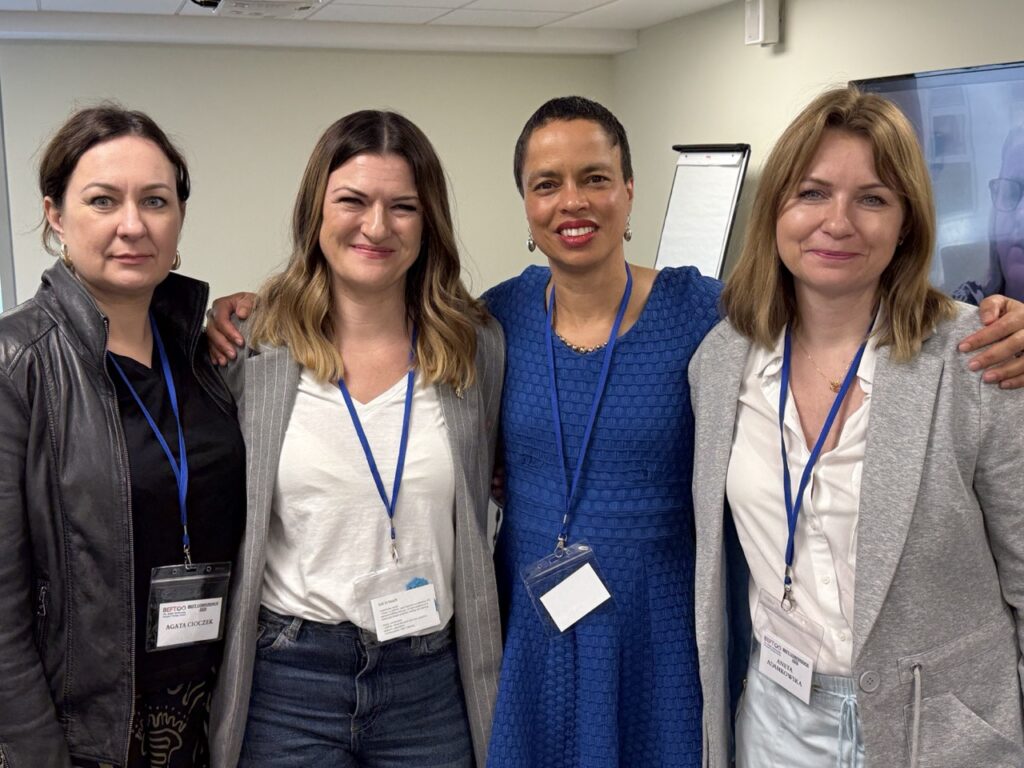
🌈 “In Safe Hands – Diversity in EFT Therapy” – Sandra Taylor
After lunch, Sandra Taylor, BEFT co-director and EFT trainer, gave a talk on diversity in EFT therapy. She started from the ICEEFT statement – that we aim to create a climate of inclusion, an environment where everyone can feel safe and valued, regardless of faith, race, ethnicity, sexual orientation, gender expression, age, social class, mental health, or disability. And she posed a question that echoed through the whole afternoon: as a therapist, do you set the bar at “do no harm” and use EFT as the model has historically been taught, or do you set it higher – at “strive for diversity”, taking seriously the idea of anti-racist, affirmative, context-aware therapy work? 🌟
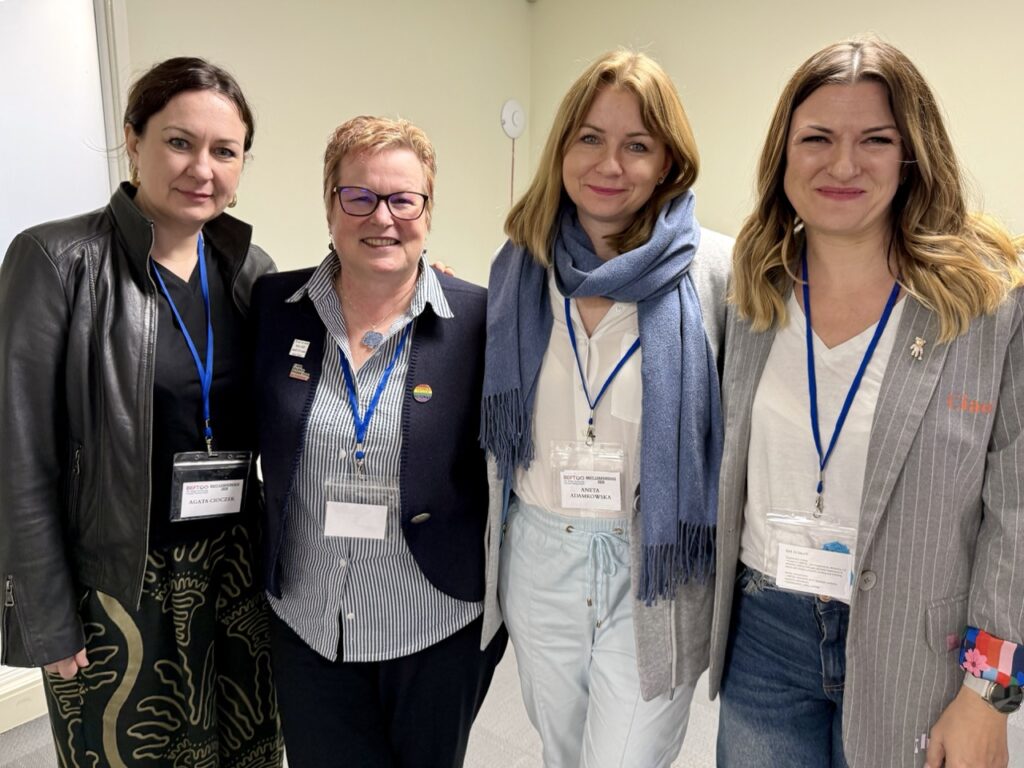
🧩 “Reflections on EFT and Neurodiversity” – Fiona Pusey & Sarah McConnell
Next, Fiona Pusey and Sarah McConnell invited us to reflect on working with neurodivergent couples. They understand neurodiversity as a 360-degree view embracing both what we describe as neurotypical and neuro-atypical – a combination of traits that are both strengths and challenges. They spoke very concretely about the signs that, in the consulting room, one partner may have undiagnosed neuro-atypicality: strong sensory reactions or no reaction at all, difficulty interpreting what others think or feel, difficulty regulating emotion, alexithymia, difficulty maintaining the natural give-and-take of conversation, a tendency toward monologues on a favourite subject, significant time spent alone, special interests, repetitive routines, anxiety, and difficulty building close bonds.
🤝 Their central thought was that even without an official diagnosis, both partners need to accept that this is playing a role in their struggles – because only when they look at the relationship through a neuro-atypical lens can they begin, together, to find solutions and reach understanding. Acceptance comes with grief for what was supposed to be and isn’t. EFT – with the right adaptations – can do beautifully in this work.
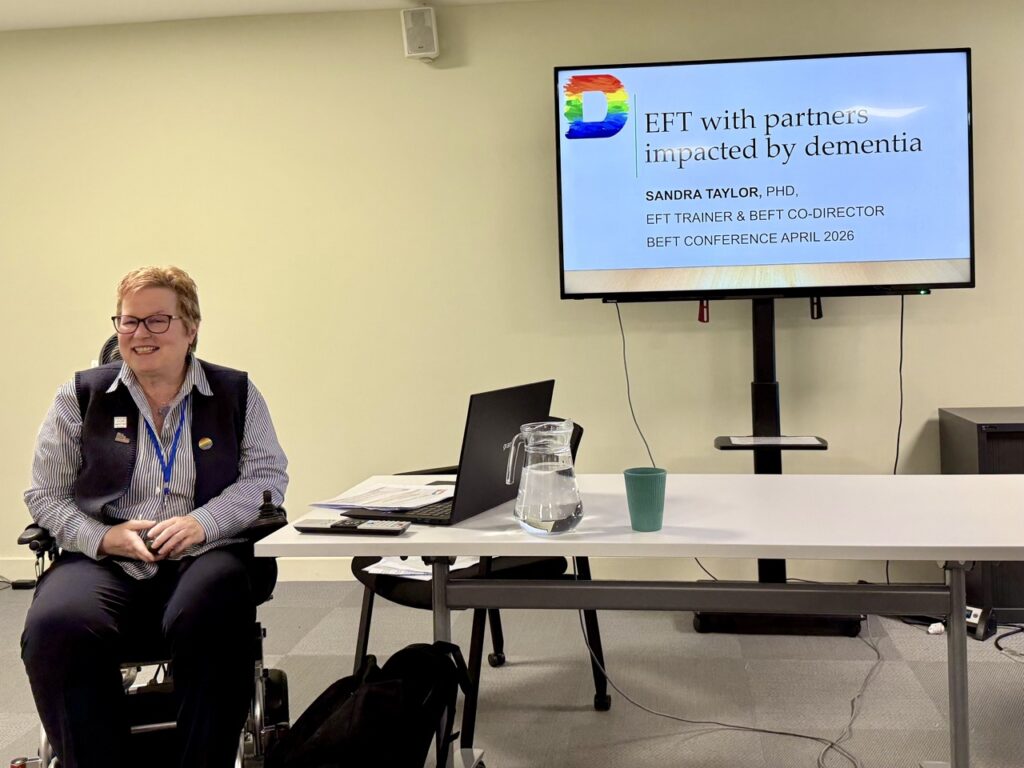
🕰️ “EFT with partners impacted by dementia” — Sandra Taylor
In the second round of parallel sessions, Sandra Taylor returned with a topic she carried from a double perspective – that of an EFT therapist, supervisor, and trainer, but also a woman who accompanied her own wife through dementia, until her death. 💔 It was one of the most emotionally powerful talks of the whole conference.
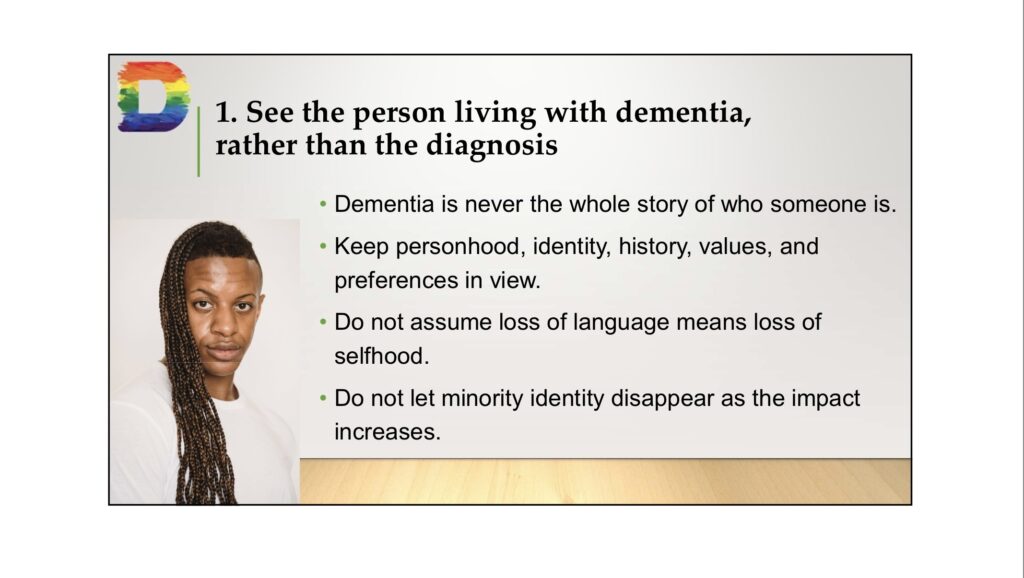
Sandra spoke about how psychotherapy with people living with dementia is rarely written about in the literature and is often assumed to be impossible in relationship therapy. And if it does happen, it easily slides into a care-focused mode and ends as soon as the person living with dementia can no longer participate in traditional ways. But it can and should be done, she argued, if we keep a few things in view.
👁️ First: see the person, not the diagnosis. 💑 Second: keep the relationship at the centre. Dementia affects the bond, not only the individual. 🛡️ Third: understand the attachment logic of protective strategy. What looks like “behaviour” – in either partner – often makes sense when read as protection. 🌍 Fourth: social context and minority experience. Safety, recognition, stigma, legitimacy — all shape the bond. 🔧 Fifth: adapt the therapy without abandoning the model. Early – stages 1-3 of EFT may be possible. In the advanced stage – within stage 1, small moments of contact may be the whole work. 🙏 Sixth: humility about limits and possibilities. Therapy will not stop progressive loss or guarantee continuity.
🤲 She illustrated this with a therapeutic micro-scene from a later phase of work with a couple, where nothing is being fixed. There is only the quiet truth that contact, comfort, and love can still be real and meaningful, even when so much else has gone. 💗
Sarah McConnell closed the conference, and we walked out into the London streets in that specific state that follows a good day of training – head full, body tired, heart soft. 🧠💞
🛋️ 20 Maresfield Gardens – visiting Freud
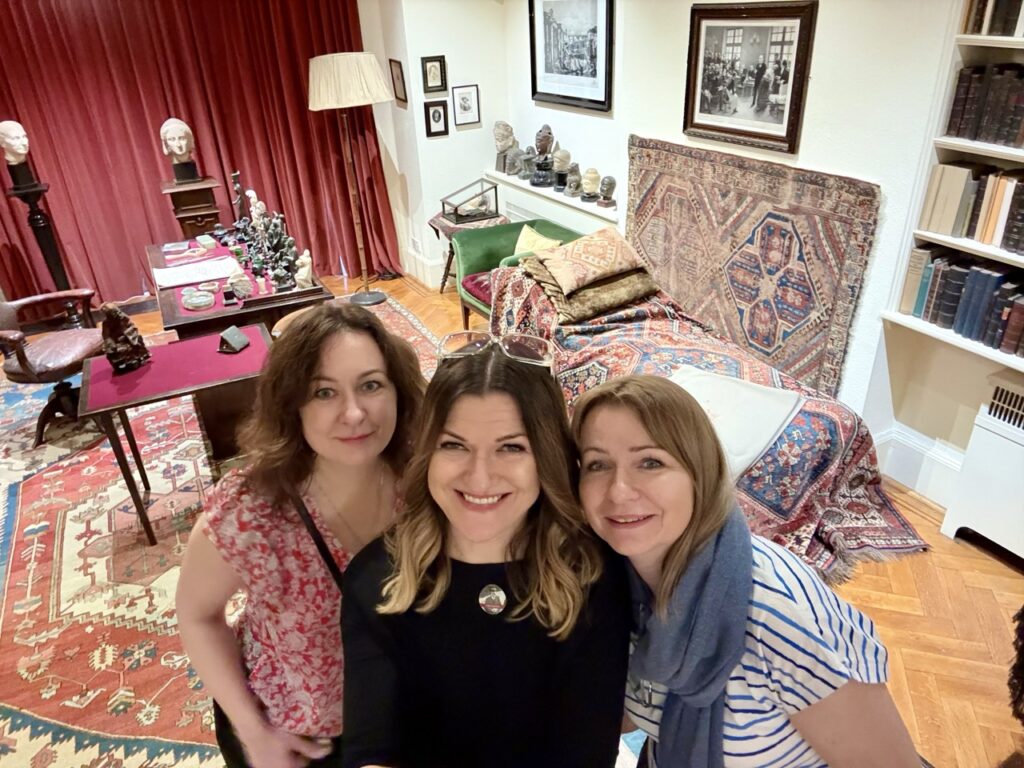
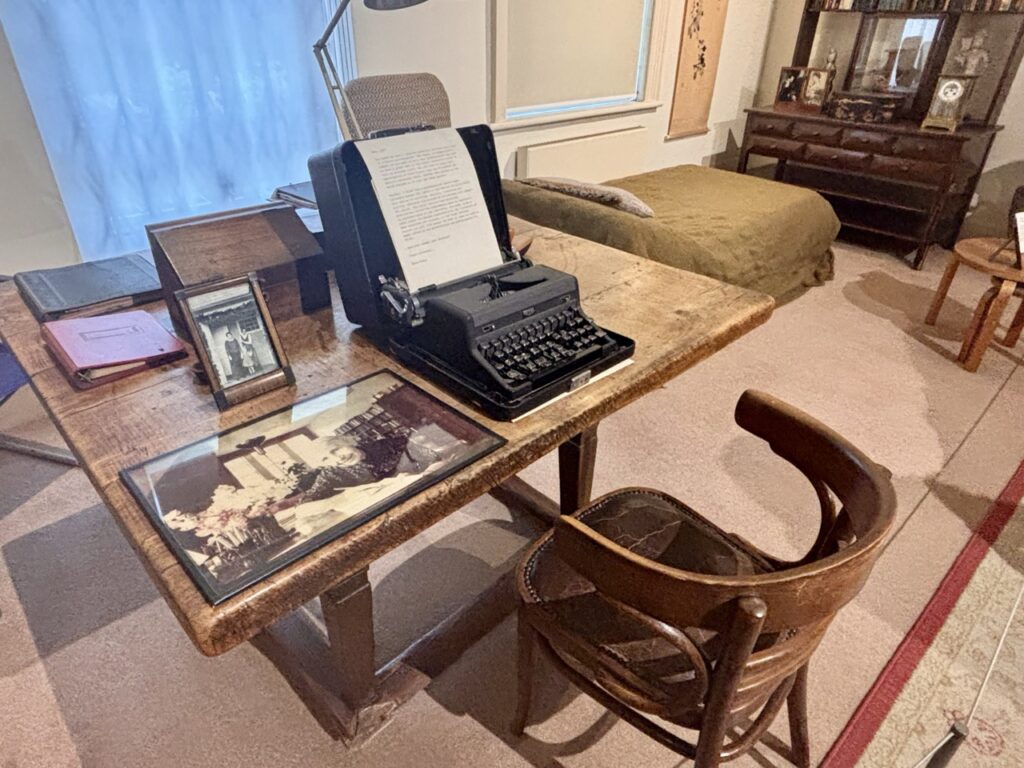
The next day we went to the Freud Museum in Hampstead. 🏡 20 Maresfield Gardens – an address known to anyone who has ever read a single book about psychoanalysis. This is the house where Sigmund Freud spent the last year of his life, after fleeing Nazi Vienna in 1938. His daughter Anna lived here for decades after his death, carrying on her own clinical and organisational work.
It’s hard to describe what it feels like to walk into the study and see the couch. 🛋️ Covered in Persian rugs, surrounded by walls of books 📚, with the collection of ancient figurines Freud brought back from Egypt, Greece, and Rome – small deities whose presence was meant to remind him of something. These are the original pieces of furniture and objects moved here from the Vienna apartment, the place where the idea was born that talking could be a form of healing. That the unconscious has a grammar. That what is unprocessed returns in dreams, in slips, in symptoms. That the therapeutic relationship is itself an instrument.
✨ We stood in that room with all the baggage of the previous day – with Robert speaking about the reconsolidation of emotional memory, with Matt quoting Bowlby on defensive exclusion, with Sandra describing rementing and the moment when a couple meet on an emotional level despite advanced illness. And we saw very clearly how much of what we do today in EFT is a continuation of the conversation Freud started in Vienna and finished here, in Hampstead.
🔗 EFT is not psychoanalysis. It works differently with time, differently with the relationship, differently with emotion. Sue Johnson, drawing on Bowlby, Rogers, and Minuchin, placed attachment and emotion at the centre as organising forces, not as symptoms to interpret. But there are intuitions that connect the two worlds: that what we cannot think, the body remembers. That childhood patterns of bonding do not disappear – they return in the close relationships of adult life. That the therapeutic relationship is the place where an old emotional truth can meet a new corrective truth. And that change is possible. 🌱
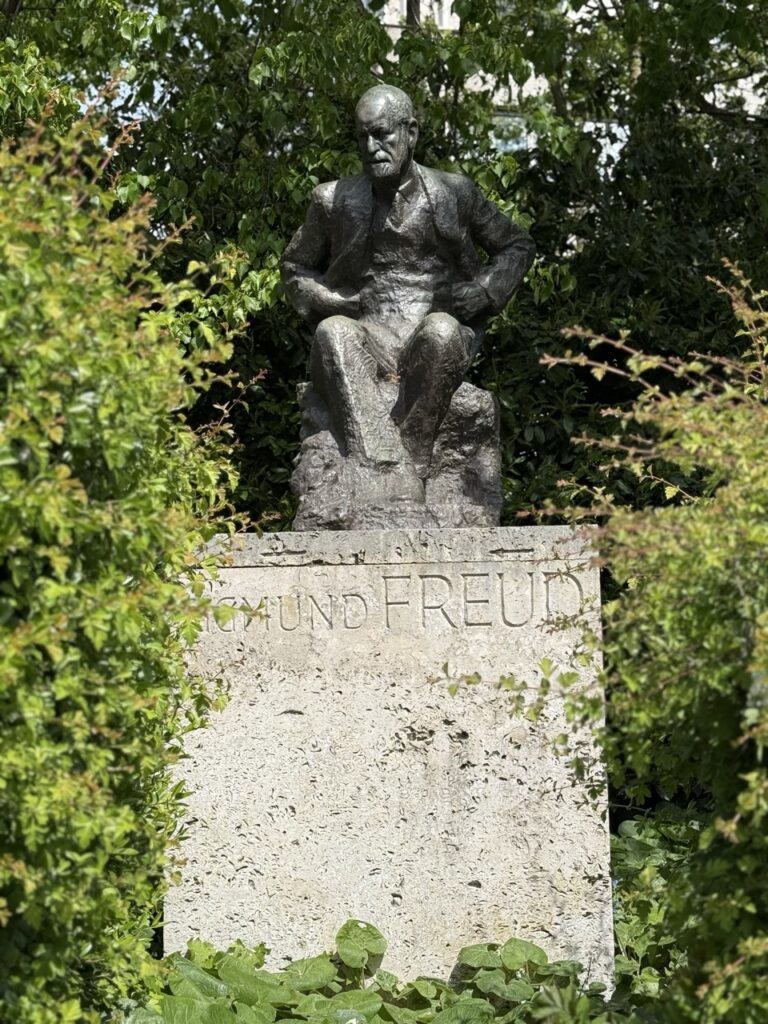
🌳 We left Maresfield Gardens and walked for a long time toward the centre of contemporary London, in silence – that good kind of silence after nourishing experiences. From Freud’s couch to the EFT cycle, from the first dialogue about the unconscious to working with touch on the knee of a partner with dementia – it’s all one conversation, conducted for over a hundred years now, about how people suffer, how they heal, and what it means to be together. 💞
🎭 Hadestown – love, work, play
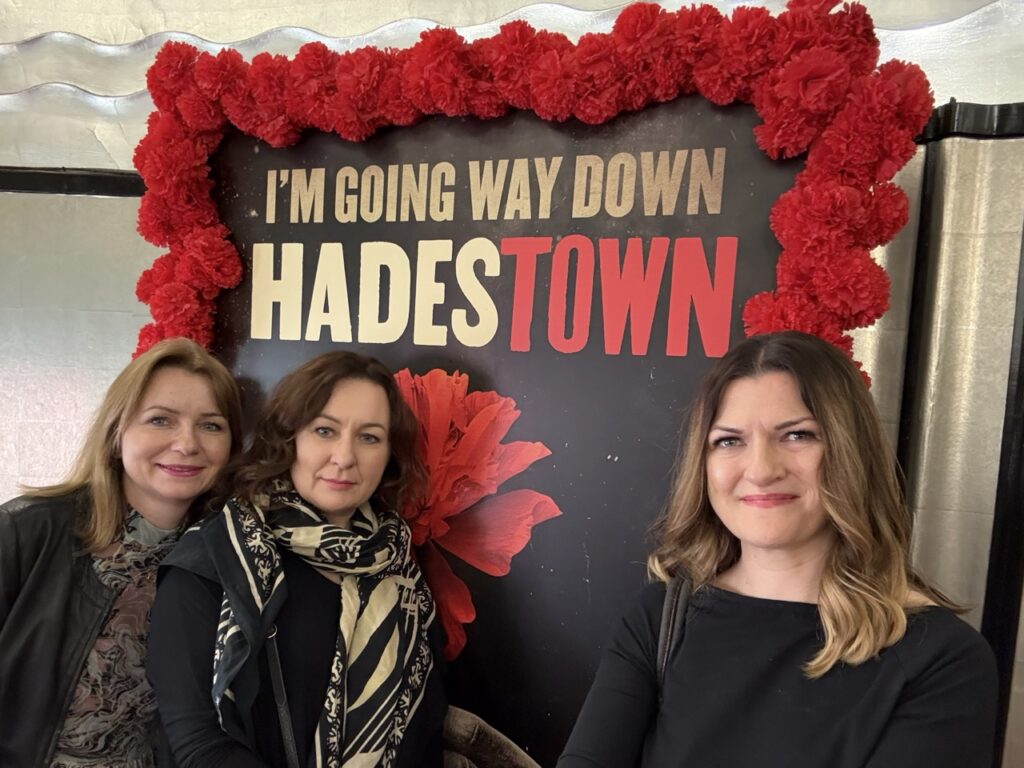
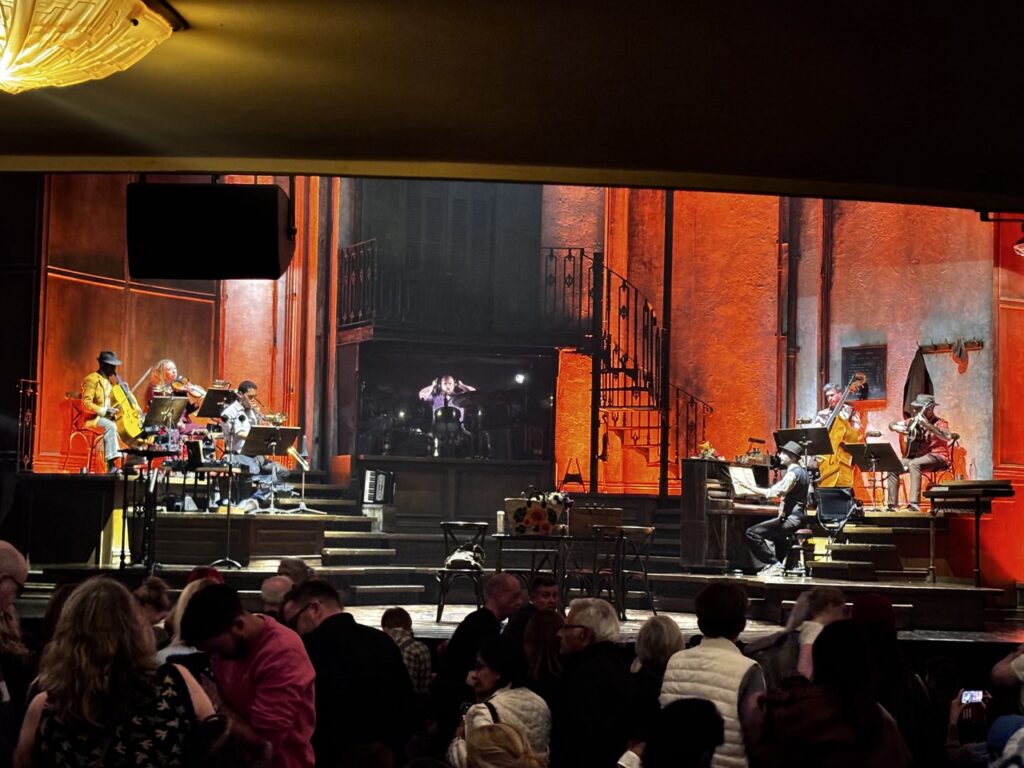
In the evening we still made it to the theatre, to Hadestown. 🎶 Because if Freud were to sum us up, he would probably nod – he is famously credited with saying that mental health is the capacity for love, work, and play (lieben, arbeiten, spielen). The BEFT conference was work – intensive, clinically dense, demanding attention and disciplined thinking. The visit to Maresfield Gardens was love – for that strange, beautiful, century-old conversation about the human psyche that all three of us are part of. And Hadestown was play. And at the same time – which would not have surprised Freud at all – it was also about love, about work, and about what happens when a person stops trusting.
🌑 For those who don’t know it: Hadestown is Anaïs Mitchell’s musical, based on the myth of Orpheus and Eurydice, set in the atmosphere of the American Great Depression and New Orleans jazz. Orpheus – a young poet trying to write the song that will mend the world. Eurydice – hungry, tired, who in the end is tempted by Hades and goes down into the underworld of meaningless work and shallow love. And that famous moment, which we read very, very therapeutically that evening – Orpheus comes back for Eurydice, he is to lead her out of Hades on one condition: he must not turn around. And he does turn around. Because doubt is stronger than the song.
💔 We sat with that whole weekend of attachment in our heads. Because that scene is almost textbook attachment anxiety in action – protest, lack of trust, turning back, checking. The very thing Robert Allan had spoken about: when the attachment system learns not to trust that the other is there, it switches into hyperactivation and starts checking. And checking – in the myth and in the consulting room – is sometimes exactly what severs the bond we are so desperately searching for. Hades, in turn, with his wall, whose construction gives the workers a sense of purpose but at the same time closes them off from the world – that too is a portrait of a mechanism we know well in couples therapy: we protect ourselves by building walls, and then we cannot reach each other.
🎤 At the same time, Hadestown says that the song is sung again, even when it didn’t work the first time. We’re gonna sing it again. Every good therapy is a little about that – that we try once more, better, with more trust, even though we know how easy it is to turn around at the wrong moment.
📓 We are coming back from London with notes full of quotes, with a few fresh clinical maps, with a sense of belonging to a community that does not shy away from difficult subjects – and with very concrete curiosity about how all of this will land in the consulting room over the coming weeks.
See you at the next trainings and conferences. And if you ever find yourself in London – plan in those two hours at Freud’s house. It’s worth it. 🛋️✨